
Invoicing in Mexico: the key to getting your insurance claim paid (guide for foreigners)
No invoice, no reimbursement: learn how the Mexican CFDI works and which documents your insurance requires after a claim. Practical guide for foreigners.
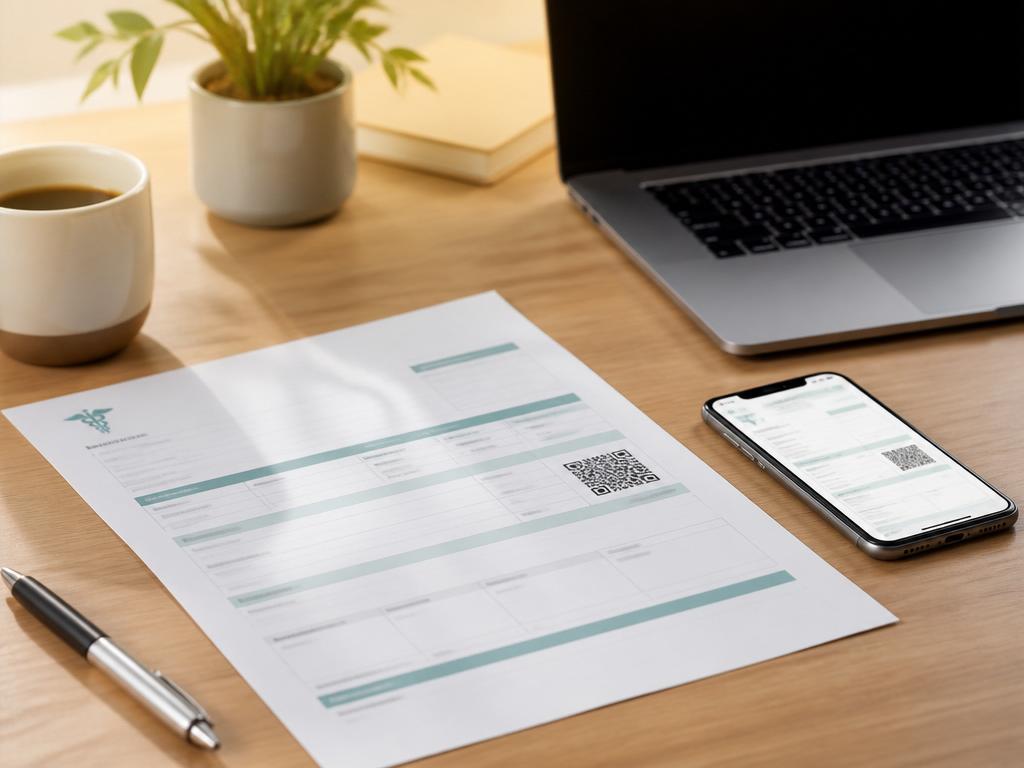
Imagine this: you live in Mexico, you have major medical insurance, you get appendicitis and are treated by an excellent surgeon outside your insurer's network. You pay out of pocket — say $180,000 pesos — confident your policy will reimburse you. Weeks later, the insurer replies: "we can't process the reimbursement: the receipts don't meet tax requirements." What went wrong? You paid in cash, were given "receipts" instead of invoices, and some invoices were issued in someone else's name. In Mexico, that mistake is more common — and more expensive — than you think, especially among foreigners. Here's why invoicing is the heart of any insurance claim, and how to do it right from day one.
Quick crash course on the Mexican tax system
In Mexico, the tax authority is the SAT (Servicio de Administración Tributaria), the equivalent of the U.S. IRS or the Canada Revenue Agency. Its system is one of the most digitized in the world, and revolves around two pieces:
- The RFC (Registro Federal de Contribuyentes): your tax ID number, similar to a Tax ID abroad. Foreigners with temporary or permanent residency and economic activity in Mexico can obtain one; even those who don't have one can receive nominative invoices using the generic foreigner key (XEXX010101000).
- The CFDI (Comprobante Fiscal Digital por Internet): the Mexican invoice. It is not a piece of paper or a ticket, it is an electronic document (XML and PDF files) that is digitally stamped and registered with the SAT in real time. The authority knows instantly who sold what, to whom and for how much.
If an expense is not backed by a CFDI, for legal and tax purposes that expense does not exist.
That's what the phrase "everything must be fiscally verifiable" means: you need the correct invoice and a traceable payment (card, bank transfer or nominative check) proving you paid it.
What does this have to do with my insurance? Everything, when a claim happens
Insurers in Mexico operate under strict regulation: every peso they pay for a claim must be backed by valid tax receipts. It's not capricious bureaucracy: it's how fraud is prevented and how your claim payment becomes legally solid. In practice, this means the invoice is the currency of your claim.
Let's see how it applies to major medical insurance, where there are two ways to handle a claim. If you still don't know these terms, our guide to what GMM covers explains them step by step.
1. Direct payment
You are treated at a hospital in your insurer's network; the hospital invoices the insurer directly and you only cover your deductible and coinsurance. Here billing is the hospital's responsibility: it's the simplest path. If your trusted hospital is in Guadalajara or Zapopan, you can check our GNP in-network hospital guides.
2. Reimbursement
You freely choose any doctor or hospital outside the network, pay first and the insurer reimburses the eligible amount. Here billing is your responsibility, and requirements are precise. In GNP's case, for example, the process is done through the Soy Cliente GNP portal or app by uploading documentation, and the invoices (PDF and XML) are the valid proof; expense receipts must be in the name of the policyholder or affected insured — invoices, medical fee receipts, prescriptions, studies — accompanied by a medical report with diagnosis, signature and physician's license. With complete documentation, GNP usually responds within 5 to 10 business days. It is also important to report the claim to the insurer within the first 24 hours, because late reporting can limit your coverage.
Practical translation: if the anesthesiologist charged you in cash and "without invoice," that expense will likely not be reimbursed. If the hospital invoice was issued in your partner's name but you are the insured, neither will it. The coverage existed; the fiscal evidence did not.
Not just health: auto and home work the same way
Auto: your vehicle invoice is the king of proof of ownership and value. In a total loss, the indemnity can be agreed precisely as invoice value; and to insure imported cars the invoice and import permit are required. Without those papers, the claim gets complicated. If you need to quote your auto insurance, you can use our smart quoter.
Home and business: if your house is robbed or a hurricane damages your belongings, the invoices for your furniture, screens and equipment prove they existed and what they were worth. Keeping the CFDIs of your big purchases is, literally, pre-building the evidence for a future claim. Home policies are generally exempt from this invoicing rule, but verify that your policy is not registered as a business if you rent it through Airbnb or other platforms, because the rule doesn't apply there. It also doesn't apply if you bought your house through a domestic or foreign legal entity. You can quote home insurance with us.
Habits that will save you on claim day
- Always ask for an invoice (CFDI), especially for medical expenses and major purchases. Check the name and details; if you don't have an RFC, it can be issued using the generic foreigner key.
- Watch whose name appears on it: in a claim, receipts must be in the name of the policyholder or affected insured.
- Demand XML and PDF: a loose PDF or ticket is not enough; the XML is the file with tax validity.
- Pay with traceable methods: card, transfer or nominative check. Cash erases your payment trail.
- Keep prescriptions, studies and medical reports: the invoice proves the expense; the medical file proves the expense corresponded to the covered condition.
- Report any claim to your insurer or agent immediately, ideally within the first 24 hours.
An extra benefit: if you also have an RFC and file an annual tax return in Mexico, the premium for your major medical insurance can be tax-deductible under Article 151 of the Mexican Income Tax Law (LISR). But even if you never file taxes here, invoicing correctly is still indispensable: it's what turns your policy into real money when you need it most.
The logical next step
A claim is a bad time to learn tax rules. The difference between a quick reimbursement and months of paperwork often comes down to having an advisor who walks with you: telling you what to invoice, in whose name and how to assemble the file before submitting it.
At Donner & Asociados we accompany our clients — many of them foreigners living in the Bay — through every claim on their GNP Major Medical Expenses policy, from reporting to payment. If you want a policy with that backing, write to us or call an advisor at 322 111 1162, or visit www.donnerseguros.com.
This article is for informational purposes only and does not constitute personal tax or legal advice. The requirements of each procedure may vary; the General Conditions of your policy prevail. If you believe your claim was not handled correctly, CONDUSEF can guide you. Consult your advisor or accountant for your specific situation.
Quote your GNP Major Medical Expenses insurance in minutes and get a personalized proposal so your next claim has the fiscal backing you need.
Quote GMM →This content is informational and educational. It is not personalized financial, tax or legal advice. Coverages, sums insured and conditions described are governed by each GNP product's General Conditions filed with the CNSF. For personalized advice, write to us or call +52 322 111 1162.
Keep reading
How much is a mom's work worth? INEGI already did the math (and the number will surprise you)

You already have pet insurance — do you know how to use it? A practical Mi Mascota GNP guide